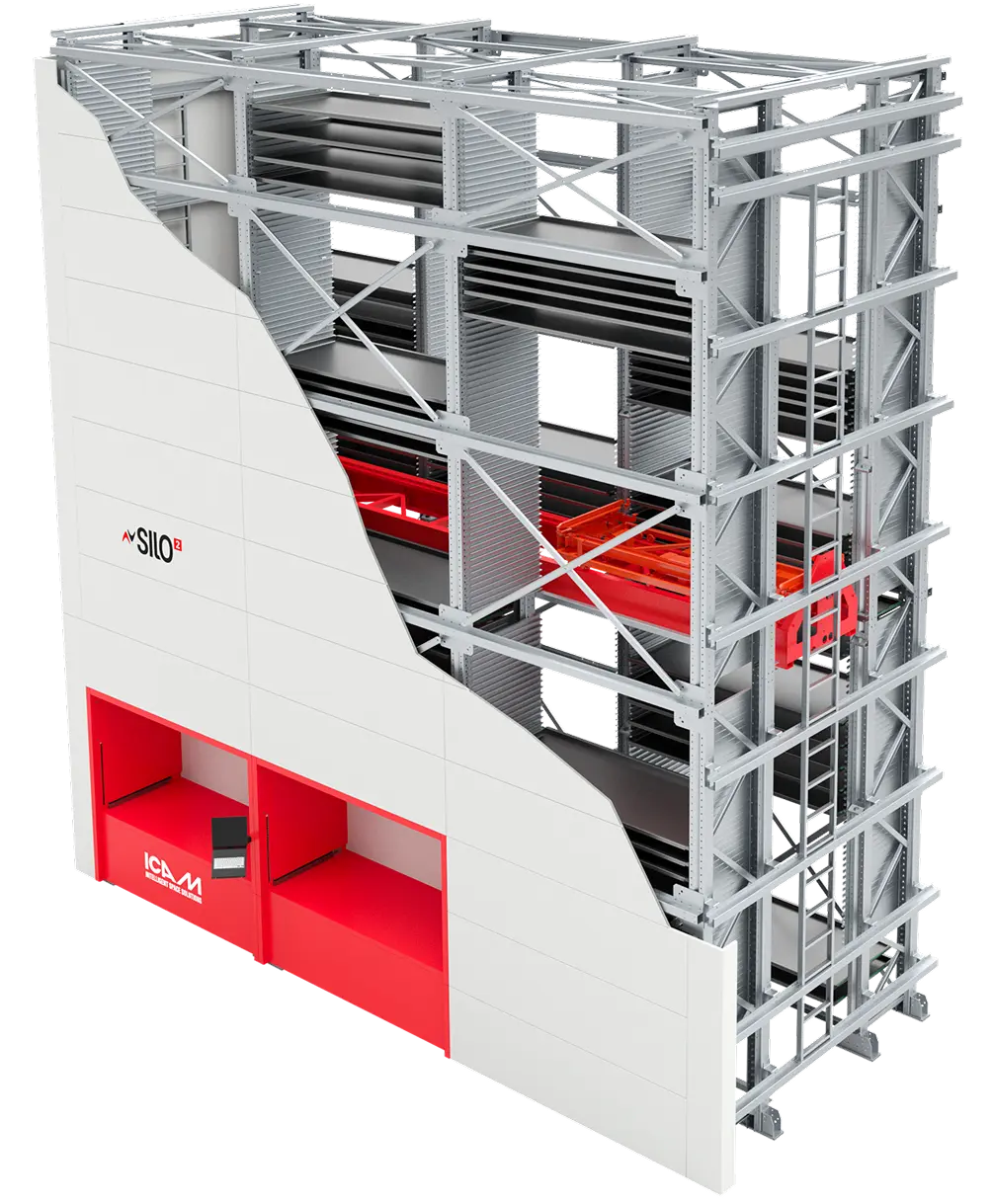
If you're planning a warehouse automation upgrade in Singapore, two of the most common storage solutions you'll come across are the Vertical Lift Module (VLM) and the Automated Storage and Retrieval System (ASRS). Both maximize storage density and reduce manual handling — but they solve slightly different problems.
What is a VLM?
A Vertical Lift Module is an enclosed automated storage unit that uses ceiling height to store trays of goods, delivering them to an operator at an ergonomic pick height.
Best suited for:
- Spare parts and tool storage
- Manufacturing and maintenance operations
- Healthcare and lab inventory
- Facilities with limited floor space but available ceiling height
What is an ASRS?
An Automated Storage and Retrieval System is a broader category — typically a racking structure served by cranes, shuttles, or robotic retrieval mechanisms that move pallets, totes, or cartons in and out of storage automatically.
Best suited for:
- High-volume distribution centers
- Operations needing very high throughput
- Facilities storing palletized or cartoned goods at scale
- Businesses planning significant future growth
How to decide
- What are you storing? Small parts/tools lean VLM; pallets/high-SKU cartons lean ASRS.
- How constrained is your floor space? If floor space is the biggest constraint and ceiling height is available, VLM often wins.
- What's your throughput requirement? Very high pick/put rates at scale typically favor ASRS.
- What's your growth trajectory? ASRS is often designed with future scale in mind; VLM units can be added incrementally.
The short answer
There's no universal "better" system — it depends on what you're storing, how much space you have, and how fast you need to move. Many ICAS clients in Singapore run both in the same facility: VLM for parts/tools, ASRS for high-velocity palletized storage.
Larger, structural investment
Trays (small parts, tools, cartons)
Pallets, totes, cartons at scale
Moderate, single-operator pace
High, designed for volume
Space-constrained facilities
High-volume distribution operations
Scales within designed structure
Not sure if VLM or ASRS fits your space?
Send us your floor plan and inventory profile and we'll recommend a fit.