
Warehouse Control System (WCS)
Connecting software and automation equipment through real-time control and orchestration.
ICAS Technology, a Singapore-based intralogistics system integrator, provides warehouse control systems that coordinate automation equipment such as conveyors, sorters and AMRs in real time, linking your WMS and ERP with the equipment on the warehouse floor.
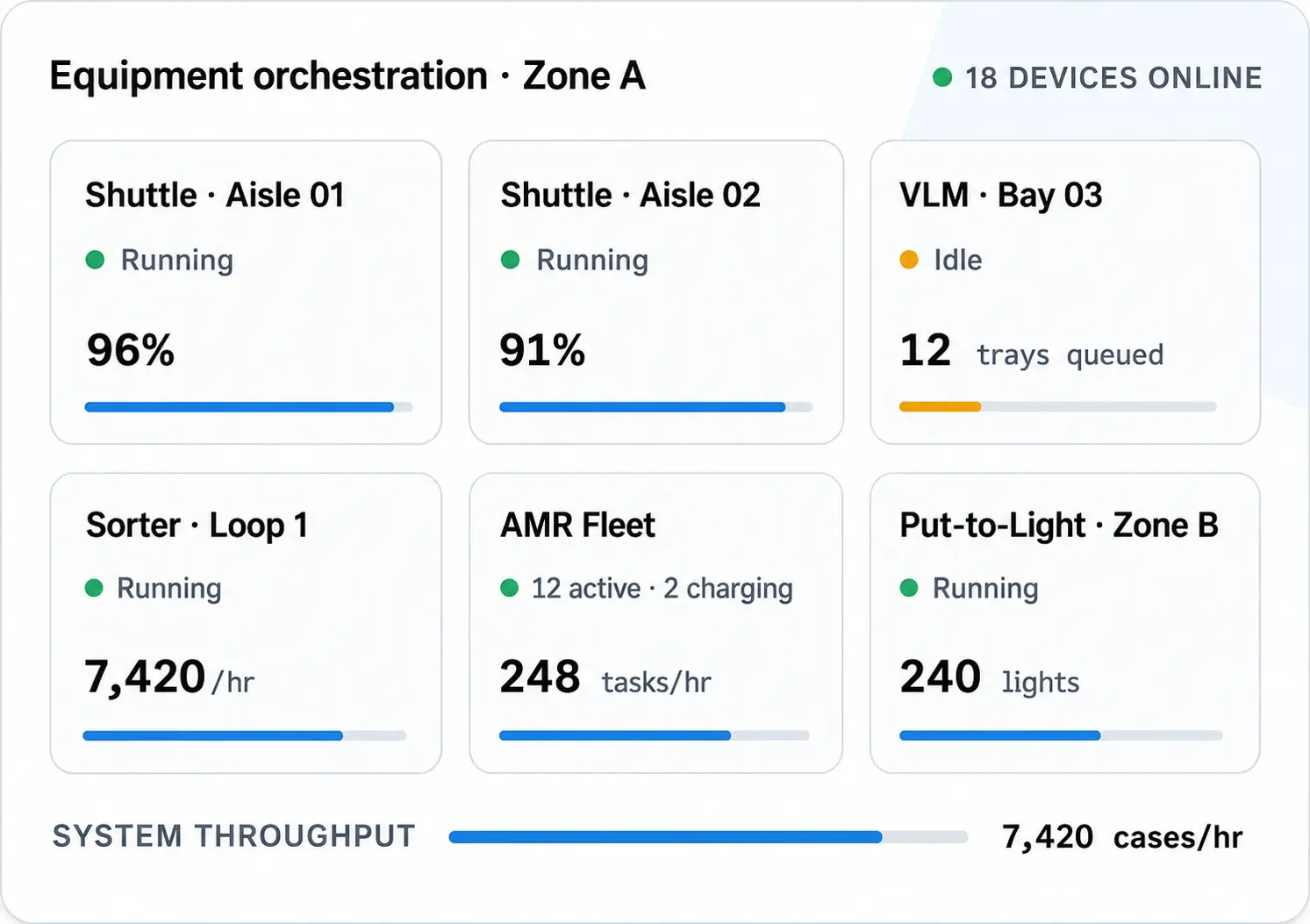
Illustrative interface. Sample data, not actual performance.
What a Warehouse Control System Delivers
Real-time equipment control
Coordinate automation equipment through centralized control.
Workflow orchestration
Manage task execution across multiple systems.
Operational visibility
Monitor automation performance and system status.
Scalable integration
Support future automation expansion and system upgrades.
How a WCS Coordinates Warehouse Automation Equipment
The WMS or ERP generates the work; the WCS routes it to conveyors, sorters and AMRs, coordinates execution in real time, and passes status back.
Generation
Routing
Execution
Feedback
WCS, WMS, PLC and SCADA: Where Each System Fits
- An ERP system manages business-level information such as orders and inventory records.
- A Warehouse Management System (WMS) manages stock locations, warehouse orders and operational workflows.
- A Warehouse Control System (WCS) coordinates automation equipment such as conveyors and sorters, tracks execution status and reports information back to higher-level systems.
- PLCs control individual machines and equipment. SCADA systems provide equipment monitoring, status visibility and alarm information.
Typical WCS Applications in Singapore Warehouses
Where a WCS coordinates automation equipment
WCS Integration with WMS, ERP and Automation Equipment
Connects WMS and ERP systems with automation equipment such as conveyors, sorters and AMRs, so orders and inventory instructions reach the equipment as executable tasks.
A WCS typically receives tasks from a WMS or ERP, translates them into equipment-level instructions, monitors execution status and exceptions, and reports results back. The equipment compatibility and interface requirements depend on the existing systems and should be confirmed during project scoping.
What to Check Before Choosing a Warehouse Control System
- Which equipment and controllers must be connected?
- How will the WCS connect with the WMS and ERP, and who owns each interface?
- How should exceptions and manual fallback be handled?
- How should equipment status and alarms be monitored?
- How easily should additional equipment be connected in the future?
- What testing, commissioning and support arrangements are required?
Warehouse Control System FAQs
Common questions about how the Warehouse Control System coordinates your equipment and connects to the systems you already run.
What is the difference between a WCS and a WMS?
A WMS manages inventory, orders and warehouse workflows. A WCS controls the automation equipment that carries the work out: the WMS decides what needs to happen, and the WCS coordinates conveyors, sorters and AMRs in real time to make it happen.
Can WCS integrate with our existing WMS and ERP?
Yes — a WCS connects WMS and ERP systems with automation equipment into one coordinated operation. The interfaces depend on your existing systems and are scoped with our specialists.
What kind of equipment does WCS coordinate?
Conveyors, sorters, AMR fleets, and other material flow automation across the warehouse.
What is a warehouse control system (WCS)?
A WCS is software that sits between the WMS and the automation equipment on the warehouse floor. The WMS or ERP generates the work; the WCS routes it to conveyors, sorters and AMRs, coordinates execution in real time, and passes status back. As a WCS integrator in Singapore, ICAS Technology connects warehouse control systems with WMS, ERP and compatible automation equipment.
What should I check before choosing a WCS for a warehouse in Singapore?
List the automation equipment you run or plan to add, confirm how the WCS will connect to your WMS and ERP, and check that it can grow with your operation. Our specialists can help evaluate your requirements.
Can a WCS work with equipment from different suppliers?
Compatibility depends on the equipment and the control interfaces available. The equipment list and interface requirements should be reviewed during project scoping.
Do we need a WCS for only a few conveyors?
Standalone machines may operate using their own controls. A WCS becomes useful when warehouse tasks need to be coordinated across multiple pieces of equipment.
What does a WCS integration project involve?
An integration project typically involves listing the equipment and interfaces, defining tasks and status messages exchanged between systems, and testing the required workflows before go-live.
Warehouse Automation Starts With the Right Control Strategy
Our team helps organizations integrate software and automation technologies into a seamless operational ecosystem.
Also see: SCADA monitoring and supervisory control for equipment status, alarms and performance visibility
Talk to a Solutions Specialist